

Mont-Saint-Michel is a tidal island and mainland commune in Normandy, France. The island lies approximately one kilometre off the country’s north-western coast, at the mouth of the Couesnon River near Avranches and is 7 hectares in area.
A magical island topped by a gravity-defying abbey, the Mont-Saint-Michel and its Bay count among France’s most stunning sights. For centuries one of Europe’s major pilgrimage destinations, this holy island is now a UNESCO World Heritage Site, as is its breathtaking bay.
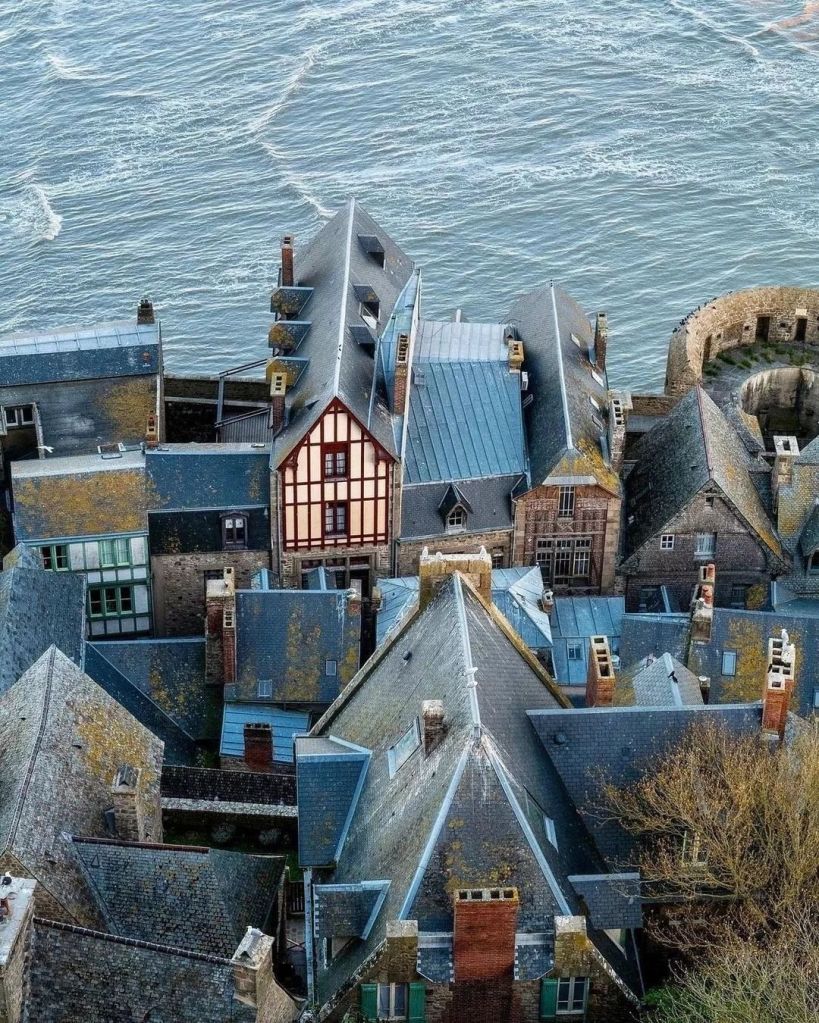
The Abbey of the Mont-Saint-Michel became a renowned centre of learning, attracting some of the greatest minds and manuscript illuminators in Europe. Vast numbers of pilgrims visited, despite endless cross-Channel conflict; in fact, the ramparts at the base of the island were built to keep the English forces out.
This staggeringly beautiful location has long captured the imagination. The story of how the mount came to be a great Christian pilgrimage site dates back to the early 8th century, when Aubert, bishop of the nearby hilltop town of Avranches, claimed that the Archangel Michael himself had pressured him into having a church built atop the island just out to sea.
HOW TO GET TO THE MONT-SAINT-MICHEL
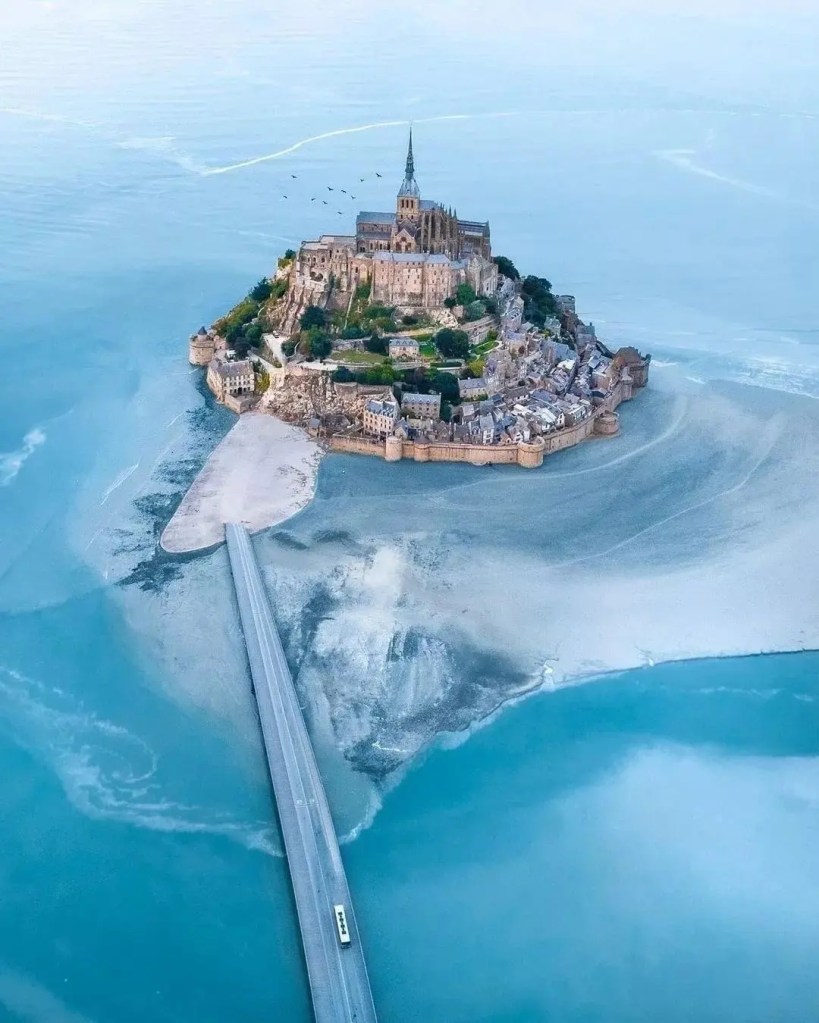
The visitor car parks have been moved further inland to preserve the Mont-Saint-Michel’s exceptional landscape. The car parks are around 1.5 miles from the mount. Once you have parked, head for the Place des Navettes, where specially devised shuttle buses called passeurs will take you to the mount. The shuttle bus stop is 800m (half a mile) from the car parks and the passeurs stop 450m away from the mount itself. The passeurs operate every day at regular intervals between 7:30am and midnight.
Alternatively, you can book a special horse-drawn carriage (maringote) or walk all the way from the car parks to the mount, taking in the magnificence of the Mont-Saint-Michel as you approach
Some Interesting Facts
Through the unique combination of the natural site and the architecture, the Mont-Saint-Michel constitutes a unique aesthetic success.
Mont-Saint-Michel is an unequalled ensemble, as much because of the co-existence of the abbey and its fortified village within the confined limits of a small island, as for the originality of the placement of the buildings which accord with its unforgettable silhouette.
Mont Saint-Michel is one of the most important sites of medieval Christian civilization.
Most of the time it is surrounded by vast sandbanks and becomes an island only when the tides are very high.
Before the construction of the 3,000-foot causeway that connects the island to land, it was particularly difficult to reach because of quicksand and very fast-rising tides.
The island was originally called Mont-Tombe but became known as Mont-Saint-Michel in the 8th century, when St. Aubert, bishop of Avranches, built an oratory there after having a vision of the archangel St. Michael.
Plan to stay overnight in the area
While it is possible to make a day trip to the Mont Saint-Michel from Paris, it’s a long and exhausting journey. Instead, plan to spend at least one night in the area. The Mont Saint-Michel is situated on the border of the Brittany and Normandy regions, both of which merit exploration. Consider basing yourself in Rennes, the capital of Brittany. Rennes is a 1.5-hour train ride from Paris, with buses (or car rentals) to the Mont Saint-Michel approximately one hour away. Another option is Saint-Malo; this coastal town is also an hour away from the Mont Saint-Michel and a great place to spend an evening by the sea.
Plan to be walking and climbing stairs
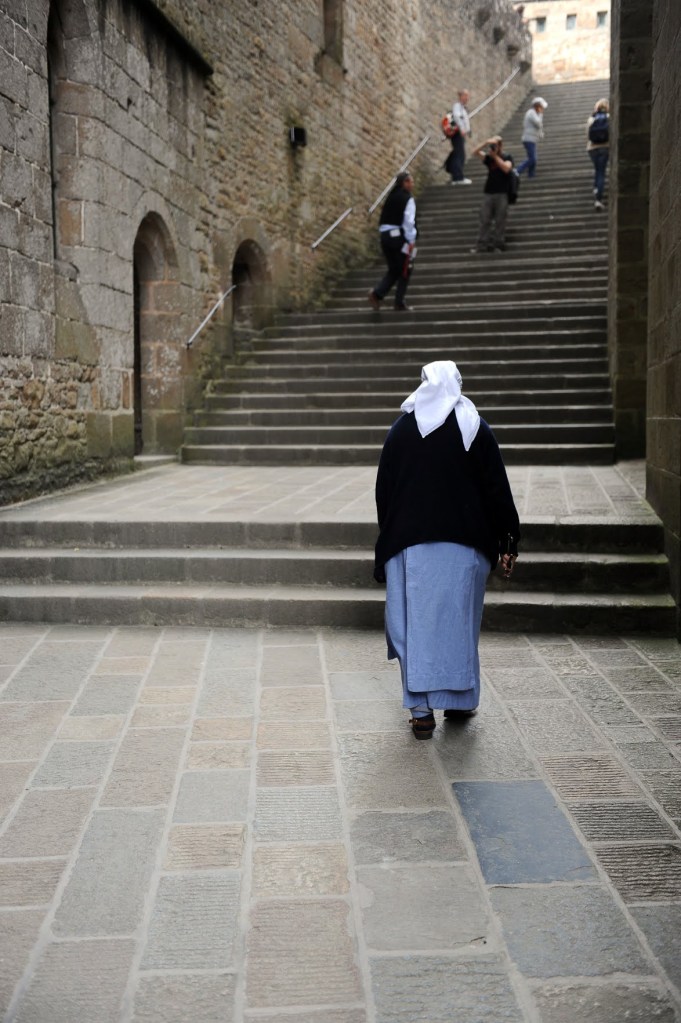
The climb up to the Mont Saint-Michel is considerable: the pathway leading to the top is steep, narrow and cobblestoned. There are also a good amount of stairs you need to climb, especially when venturing up to the Abbey. Be sure to bring a good pair of walking shoes.
There are a number of sites worth visiting
Getting into the Mont Saint-Michel is free and you could spend the day just taking in the village and its surrounding views. However, there are many things to see and do including museums, churches and of course, the spectacular Abbey perched on top. There is a small entrance fee for the Abbey (10 EUR) and it’s worth it to explore the historical monument. On the Grande Rue on the way up to the Abbey, keep an eye out for the parish church of Saint-Pierre, surrounded by a cemetery (where La Mère Poulard herself, Anne Boutiaut, lays to rest) and housing a silver statue dedicated to Saint-Michel. There’s also the Maritime Museum, which offers insight into the surrounding environment of the island and its ecology.
 Travelogram
Leave a comment